Showing posts sorted by relevance for query Menschik. Sort by date Show all posts

Sunday, April 19, 2015

More on Translating Images and The Strange Library

When talking about translations of Murakami and illustrations, one has to mention the German illustrator Kat Menschik (in the picture below), who worked on The Strange Library, among other Murakami writings. The drawing on the right shows Murakami and Menschik together (although she doesn't look like herself...).


In the previous post, I wrote about the illustrations in the British and American version of The Strange Library.  The story came out in German a year earlier, in 2013, in Ursula Gräfe's translation, Die Unheimliche Bibliothek, illustrated by Menschik. Menschik had earlier done the illustrations for three other Murakami stories: Schlaf ("Sleep," 2010, translated by Nora Bierich)  and Die Bäckereiüberfälle (which consists of two short stories, "The Bakery Attack," and "The Second Bakery Attack," 2012, translated by Damian Larens). While the first of these (The Strange Library/ Fushigi na Toshokan) was also an illustrated book in Japanese, the other three stories were not, and appeared in short story anthologies.


It would be worth thinking about the relationship between illustrations and the translated text: What new qualities do they add to the story? Do they detract from the story or help us enjoy it more? Do they make concrete something the author intended to leave vague?  In the case of stories that were originally accompanied by illustrations, why not use those? Do illustrations have to be "translated," too?  In the case of stories that originally lacked illustrations, what does it mean to add that element? 

Menschik's illustrations, as is already clear from the cover of the Die Unheimliche Biblioteque, are quite different in style from the original ones by Maki Sasaki. Below left is a picture showing both editions of The Strange Library. On the right is an illustration of the German version of Sleep, which was not illustrated in the original. 


All three stories were re-published in Japan with Menschik's illustrations. What is interesting is that the title of the Strange Library went back to the original 1982 title, Toshokan kitan (Strange Tales of a Library), and the title of Bakery Attacks ("Pan'ya Shūgeki" and "Pan'ya saishūgeki") became something like "To Attack a Bakery (or Bakeries)" ("Pan'ya o osou"). It may be the case, of course, that the Japanese version IS in fact a new edition of the original story, which was much longer. (I will order it and report.) Below are the only two illustrations included with "Toshokan kitan" in the 1983 anthology, titled Kangarū-biyori:


Below are the covers of the Japanese editions of Toshokan kitan (2014, Strange Tales of a Library), Pan'ya o osou (2013, To Attack a Bakery) and Nemuri (2010, Sleep), all with Menschik's illustrations:


Menschik's illustrations clearly are admired by many, since the Spanish edition of the Strange Library (or rather: Secret Library) (2014, Lourdes Porta, tr.) and the French edition of Bakery Attacks (2012, Corinne Atlan, Hélène Morita, tr.) also used her images:


The same is true of the story Sleep, which came out with Menschik's images in French (2010, Corinne Atlan, tr.), Spanish (2013, Lourdes Porta, tr.), and Italian (2014, Antonietta Pastore, tr.) It is worth noting that in both Spanish translations Lourdes Porta got her name on the cover! 


Wednesday, August 7, 2019

Commendatore in Norwegian, Turkish Birthday Girl, and Kat Menshik

I hope the Norwegian translators will forgive me that this announcement comes a few months late.  Killing Commendatore came out in Norwegian from Pax this spring. The book was translated by Ika Kaminka and Yngve Johan Larsen. It was not their first collaborative translation. I have to say that I am fascinated by the idea of working on a translation together with somebody else. It seems that such collaboration is in fact fairly common and may take different forms. I have only engaged in it once and found it quite challenging.  In 2002 or 2003 I was asked to translate the second part of Norwegian Wood into Polish. The first half had been done by Dorota Marczewska. I read her half, and then proceeded to work on the second half, but as I was translating, I was very aware that the text I was producing was coming out quite differently. After I finished, I was asked to make sure that the two parts fit. Dorota was not available to help for personal reasons, so I ended up having to make many decisions I wasn't sure she would approve of. As a result of this experience, I am very impressed by translators who seem to pull it off seemingly effortlessly. I believe that Ika and Ingve worked by translating alternate chapters and later making sure that the whole reads smoothly.  


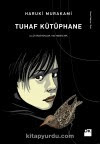
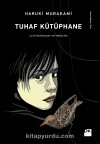
Another new translation I wanted to mention is the Turkish translation by Ali Volkan Erdemir of the short story Birthday Girl. The book uses illustrations by Kat Menshik, who has also illustrated the German versions of The Strange Library (I wrote about it on this blog here), Sleep, and The Bakery Attack. Her illustrations were later used in several language versions.

https://t24.com.tr/k24/yazi/murakamik-bag,2293


Also, in case of Birthday Girl Menshik's illustrations were used in many language versions. Here are four of the covers: German, French, Spanish, and Korean


Ali Volkan Erdemir interviewed Menshik in January 2019. You can read the whole interview here.
If we can trust Google Translate, Menshik talked about her use of color among other things.  She said she picks two basic colors for each story.  Midnight blue and silver seemed like "the most sensible choice" for Sleep, she chose dark green and brown (or "bronze"?) for The Bakery Attack. For The Birthday Girl she chose three: red, pink and orange.


Menshik did not talk about it in the interview, but it seems that she picked black and off-white as the themes for the The Strange Library, with occasional brown and red. 


As I wrote 4 years ago in a blog post about Menschik's illustrations of that last book, illustrations - together with the cover become an important element of the translation. In most cases the translator does not get to express an opinion about the cover or illustrations in the book, and it is easy to imagine that his or her visualization of the story would differ greatly from the cover designer's or illustrator's. And possibly also of the author's. Menschik presumably works on her illustrations inspired by the German translation. Is there some quality in the German translation that inspire certain kinds of illustrations? Do the illustrations then match other language versions?

The situation becomes even more complicated if the original story was illustrated, as was the case with the original of The Strange Library. Here is a picture from the original Japanese publication:


We know from interviews though, that Murakami likes Menschik's illustrations. In fact, all stories illustrated by her were later republished in Japanese using her images. Presumably, Murakami must have approved the original illustrations by Maki Sasaki, which suggests that the author approves of a variety of visual responses to his stories. In case of The Bakery Attack the title was slightly altered to say Pan'ya o osou ["To Attack a Bakery" or "Attacking a Bakery"], and with The Strange Library, the title used was the title of the original 1982 story, Toshokan kitan ["Strange Tales of a Library], rather than the 2005 Fushigi na toshiokan ["The Strange Library]. It was advertised in Japan as an "art book with a new feel."

Thursday, October 5, 2017

The Bakery Attack(s) comes out in Turkish

Murakami’s “The Bakery Attack” and “The Second Bakery Attack” have been published in Turkish this month as Fırın Saldırısı with Kat Menschik’s illustrations. The publisher is Doǧan Kitap and the book was translated from Japanese by Ali Volkan Erdemir. 

This is the third Murakami book in Turkish, after Sleep (2015, tr. by Hüsseyin Can Erkin) and The Strange Library (2017, tr. by Ali Volkan Erdemir)with Kat Menschik’s illustrations. To read more about Turkish translations of Murakami see the blog post of July 29, 2017


Saturday, July 29, 2017

Men without Women and Other Haruki Murakami Books in Turkish Translation

Having missed the publication of the Turkish version of Men without Women, which came out in January 2016 from Doğan Kitap in a translation by Ali Volkan Erdemir, I began to wonder about other Turkish translations. After some internet research, I discovered that a total of fourteen of Murakami's books have been translated by four different translators.  Taking these in reverse chronological order:


Murakami's latest Turkish translator is Ali Volkan Erdemir, who teaches Japanese literature at Erciyes University. He is also a translator of Oe and an author of books on Japan. He is pictured below along with the covers of the Murakami works he translated before Men without WomenSputnik Sweetheart (2016), After Dark (2017) and The Strange Library (2017).


Before Erdemir, for many years, Murakami's main Turkish translator was Hüseyin Can Erkin, professor of Japanese Language and Literature at Ankara University, previously mentioned in this blog. At left is a photograph from his departmental page.  In addition to Murakami, Erkin has also translated Mishima, Oe, Tanizaki, Kawabata, Abe Kōbō and other writers. Below are the covers of Erkin's translations of Murakami: Kafka on the Shore (2009), 1Q84 (2012), Hard-Boiled Wonderland and the End of the World (2011),  What I Talk about When I Talk about Running (2013), Colorless Tsukuru Tazaki (2014), and Sleep (2015), with illustrations by Kat Menschik.


Four Murakami novels were published in Turkish prior to 2009:  Norwegian Wood (2004, Skim, tr. Nihal Önol),  The Wind Up Bird Chronicle (2005, Dogan Kitab, tr. by Nihal Önol), South of the Border, West of the Sun (2007, Dogan Kitab, tr. Pinar Polat), and A Wild Sheep Chase (2008, Dogan Kitab, tr. Nihal Önol).  However, none of these was done directly from Japanese: Nihal Önol translated from the French  and Pinar Polat from the English (thanks to Ali Volkan Erdemir for this information!).  Indeed, the Turkish title of Norwegian Wood, İmkânsızın Şarkısımeans something like "Song of the impossible," which makes sense if the book was translated from French, where the title was La ballade de l'impossible (tr. by Rose-Marie Makino-Fayolle).